
General Information
Although Cape Reinga is not at the northern most tip of the country, that distinction belongs to North Cape; it has come to represent the top of New Zealand because of its accessibility.The Cape Reinga Lighthouse was built in 1941 and in operation by May of that year. New Zealands many lighthouses used to be manned by lighthouse keepers. However, in the 1980’s they became fully automated. There are now no lighthouse keepers in New Zealand, and all lighthouses are controlled from a central computer system in Wellington.
The area around Cape Reinga is spiritual to Māori and is unique as it contains a very rare flax snail, the northern green gecko and varieties of plants and trees found nowhere else in the world. Follow this link and you will find the best Postcards of New Zealand.
Columbia Bank
 Columbia Bank
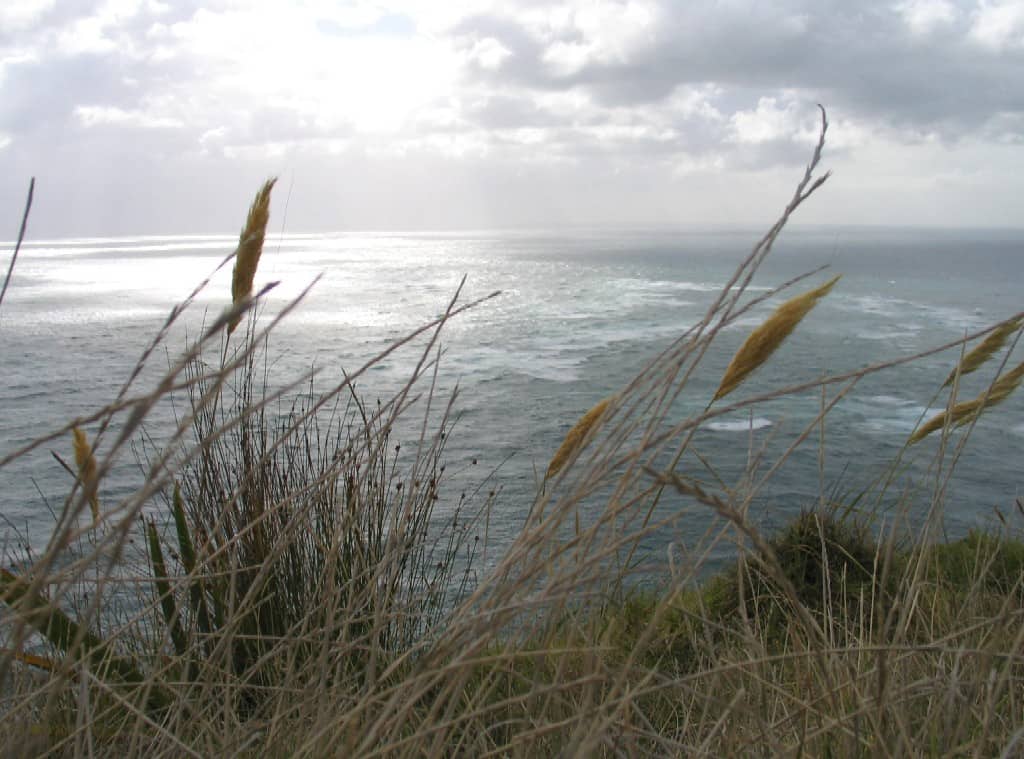
Where the Tasman Sea and Pacific Ocean meet.
Maori Mythology
1Te Rerenga 2Wairua – Cape 3Reinga is spiritually significant to Māori as according to their folklore, the spirit of the dead travel here to depart 4Aotearoa.They make their way to the 5Pohutukawa tree burgeoning from a cleft in the rock of the headland, slide down the roots of this aged tree and release their hold on Aotearoa as the great doors of kelp part to reveal the way into the underworld. They emerge from the ocean and climb 8Ohaua, the highest point of the Three Kings Islands, to solemnly bid their last farewells to Aotearoa.
When the ritual has been completed their tupuna (ancestors) compel them to turn and they will never look back again, as on turning an overwhelming sense of love enters their spirit as their tupuna reveal the path of their final journey.
They re-enter the ocean to the underworld with eagerness as their tupuna draw them towards their open welcoming arms as they wait for their arrival to Hawaiiki-A-Nui, their ancestral homeland.
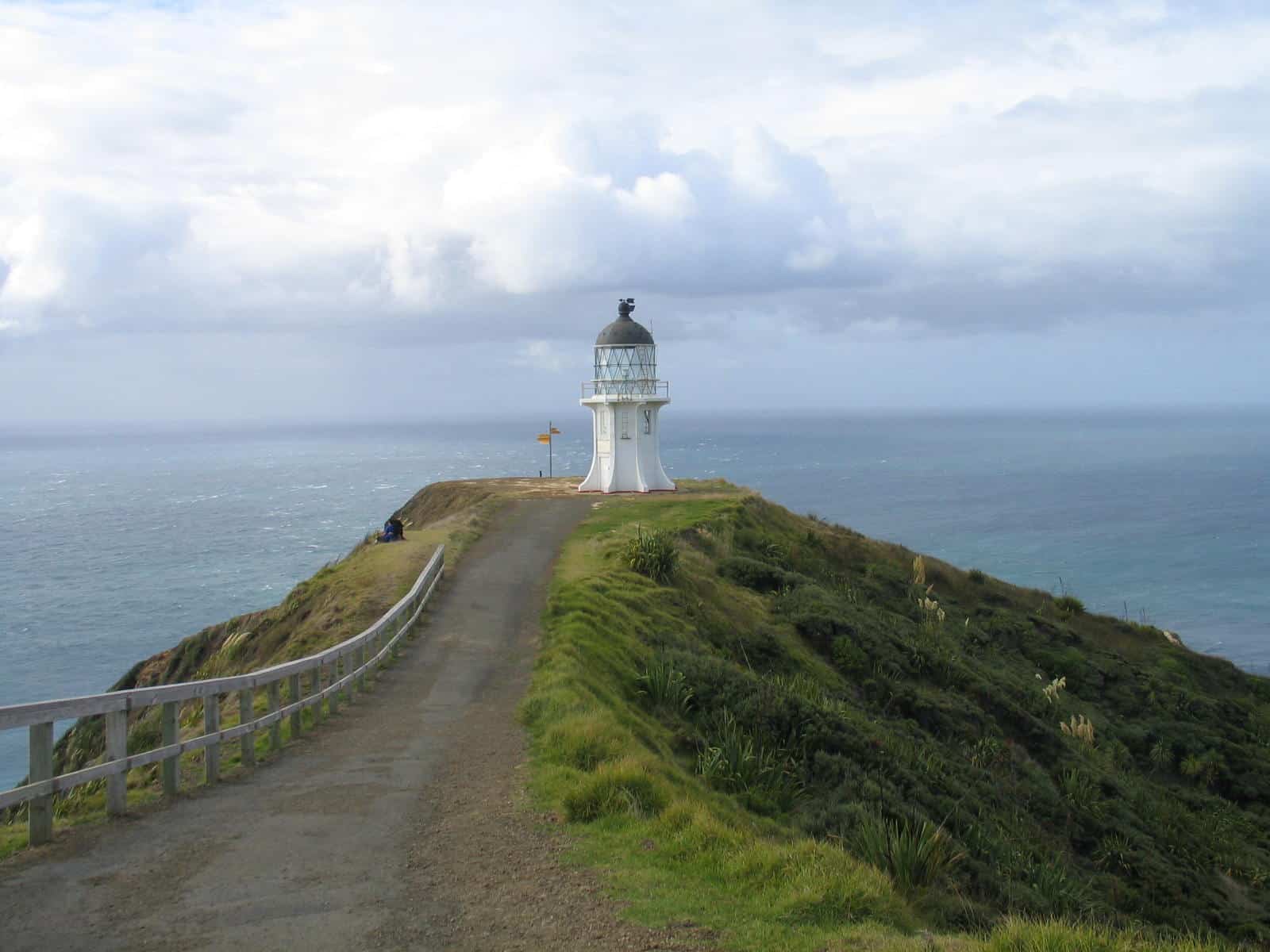
Cape Reinga Lighthouse
The lighthouse at Cape Reinga is the most visited lighthouse in New Zealand and undoubtedly the most photographed one.
Activities
Cape Reinga Coastal Walk is generally more sheltered on the East Coast compared to the wild and exposed West Coast section of the hike.
Cape Maria van Diemen
6Motuopao the island just offshore from Cape Maria van Diemen is a nature reserve and valued for its breeding colonies of fairy prion, white-faced storm petrel and black-winged petrel. The island was the site of the first lighthouse in the area from 1879 until 1941 when the lantern fittings were shifted to Cape Reinga Lighthouse and replaced with a small automatic light beacon.The sweeping stretch of beach is 7Te Werahi which stretches from Cape Maria van Diemen to Cape Reinga. Abel Janszoon Tasman the renowned Dutch navigator was the first European to site this Cape (1642) which he named Maria van Diemen in 1643 in honour of the wife of Anthony van Diemen who was the patron of his voyages and the Governor General of the Dutch East Indies for nine years until he died in 1645.