
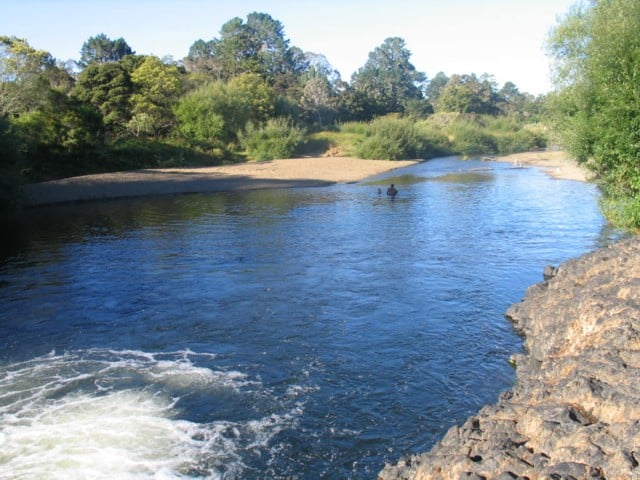
 Lily Pond, Haruru Falls
Visitors, who venture off S11, at approximately 1.5km from Haruru Falls, will be rewarded with a refreshing dip at Lilly Pond
General Information
Attractions and Activities
The Waitangi Reserve, which borders the north side of the lagoon, is a protected area for the Kiwi and Weka. There are walking tracks through the reserve, and on a night trek you may even spot an elusive Kiwi. The lagoon is a great place for kayaking, swimming and all other fun water activities. The lily pond is a great local swimming hole, and is very popular on hot sunny summer days. There are numerous walking tracks in the area. In May of each year Haruru Falls co-hosts with other towns in the local area, the Bay of Island Country Rock Festival,this runs for three days.
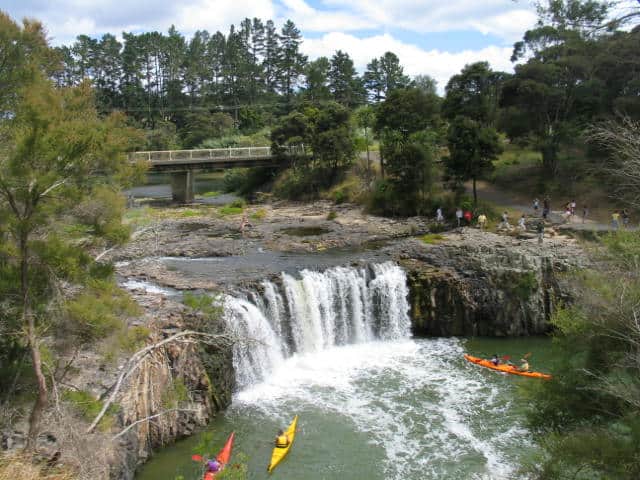 Haruru Falls
Whether you’re a visitor, or in to kayaking, boating, swimming, or a holiday maker, you will be drawn to Haruru Falls. The Waitangi River falls into a tidal lagoon at Haruru, on its journey to the sea, making it a popular holiday settlement.
Shopping
You can do all your shopping locally, because Haruru Falls caters well for the traveller. With Paihia and Waitangi just five minutes down the road, there is a huge variety of shops available.
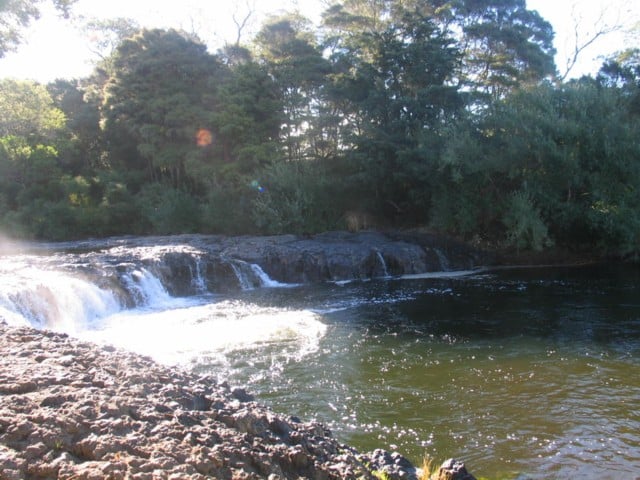 Lily Pond, Haruru Falls
The Waitangi River has created many swimming holes like Lilly Pond which is very popular with the locals.
Maori History
European History
Maori Translations
1 Haruru – Big Roar
2 Waitangi:
Wai – water
tangi – weeping, mourning
3Paihia – ‘good here’.
It is believed that Reverend Henry Williams came to New Zealand knowing only a few words of Māori, one of them being ‘pai’meaning good. When they came to Paihia, he turned to his companion, a Māori chief, and said ‘Pai here’.
4Kawakawa – Native Tree
5Kerikeri – Dig up repeatedly
6Kaipatiki Kāinga:
Kai – food
patiki – flounder
Kāinga – village